
Influencer marketing in 2026 has moved beyond experimentation and into a true growth discipline. What once lived in the “brand awareness” bucket now plays a measurable role across the entire funnel, from discovery to conversion and retention. As budgets continue shifting toward creator partnerships, the brands that win aren’t the ones posting more; they’re the ones building smarter, performance-driven influencer programs that scale with intent.
The creator economy is evolving fast: AI tools support everything from creator discovery to campaign measurement, audiences are tired of generic “pay-to-post” content, and brands are investing in longer-term partnerships that feel more like collaboration than one-off ads.
This guide covers the most effective influencer types, collaboration models, and performance frameworks brands are using in 2026 to drive both cultural relevance and measurable business results.
CONTENTS
What Are The Types Of Influencers?
One of the first steps in learning how to work with influencers is understanding the different creator tiers. Influencers aren’t one-size-fits-all; the right partner depends on your goals, budget, niche, and the level of authenticity or scale you’re trying to achieve.
At Trevant, we categorize influencers based primarily on follower count, while also factoring in engagement quality, content style, and audience trust. Here’s a breakdown of the main influencer types brands work with today, and how each fits into a modern creator strategy.
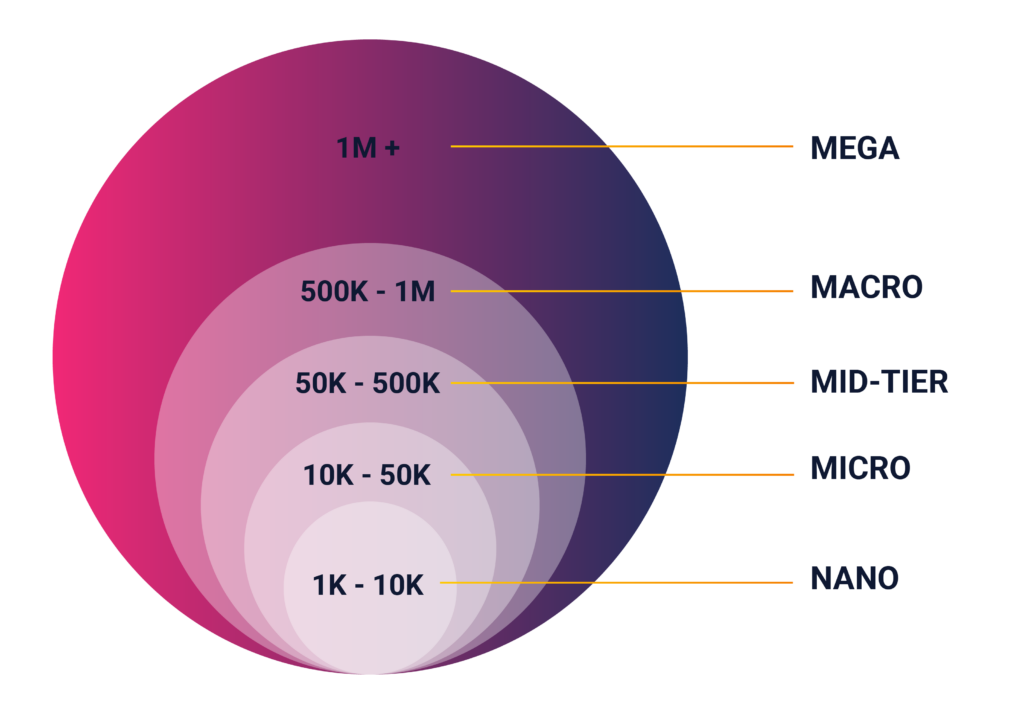
Nano-Influencers (1,000 – 10,000 followers)
Nano-influencers may have the smallest audiences, but they often deliver the biggest impact on a per-follower basis. These creators typically have close-knit, highly engaged communities and are seen as extremely relatable and trustworthy.
Because their content feels organic and personal, nano-influencers are especially effective for niche targeting, product seeding, and community-driven campaigns. They’re also one of the most cost-efficient ways to scale influencer programs when working with multiple creators at once.
In 2026, nano-influencers are especially powerful within private and semi-private spaces like Instagram Close Friends, broadcast channels, niche Discord servers, and community-driven comment sections. These environments foster deeper trust and higher intent, making nano creators ideal for seeding new products, gathering qualitative feedback, and activating word-of-mouth at scale without sacrificing authenticity.
For example, Lily (@lifeoflilyam) is a lifestyle creator with 9.7k followers on TikTok who shares everyday routines and life in New York City videos that resonate closely with her tight‑knit audience.
Micro-Influencers (10,000 – 50,000 followers)
Micro-influencers are a sweet spot for many brands. They offer a wider reach than nano creators while still maintaining strong engagement and credibility with their audience. Most micro-influencers focus on a specific niche – like beauty, fitness, home, or tech – and are often viewed as subject-matter experts by their followers.
This tier is ideal for brands looking to balance authentic storytelling with meaningful reach, especially across platforms like TikTok and Instagram.
An example is Wesley (@wesleybenjamincarter), a makeup and SFX artist with 11.3k TikTok followers, whose content has tutorials and detailed transformations, inspiring the MUA community.
Because their audiences actively seek guidance, micro-influencers in educational or informational niches often outperform larger creators when the goal is clicks, sign-ups, or product trials rather than pure reach.
Mid-Tier Influencers (50,000 – 500,000 followers)
Mid-tier influencers sit right in the middle of reach and engagement. These creators usually produce more polished, professional content and often have experience working with brands on structured campaigns. Many mid-tier influencers work with managers or small teams, which can streamline approvals, timelines, and deliverables.
Mid-tier influencers are a strong choice for multi-post campaigns, seasonal launches, or cross-platform activations that need consistency and scale. They’re also strong candidates for paid amplification strategies. Brands frequently whitelist or boost their content through paid social to extend reach while preserving creator authenticity. This hybrid approach blends organic trust with paid scale, helping brands maximize content value beyond a single post.
For example, Taylor King (@tksjuicypolls) has over 175k followers on TikTok and builds engagement by combining fashion, lifestyle, sports, and interactive post formats that keep audiences involved.
Macro-Influencers (500,000 – 1 million followers)
Macro-influencers provide significant visibility and are well-suited for brand awareness campaigns. With large audiences and high production quality, they can help amplify messaging quickly and introduce brands to new consumer segments. While engagement rates may be lower than smaller tiers, macro-influencers are effective when reach and recognition are primary objectives, particularly for established brands or major moments.
An example is Audrey Lunda (@audrey_lunda), a fashion and menswear influencer with nearly 700k followers who showcases stylish outfit inspiration and menswear styling advice.
Mega-Influencers (1 million+ followers)
Mega-influencers operate at the top of the creator ecosystem. These partnerships offer massive exposure and cultural relevance, making them ideal for large-scale launches, global campaigns, or headline-driven initiatives. Because of their scale, mega-influencer collaborations typically require larger budgets and more strategic planning, but they can instantly put a brand in front of millions of consumers.
A great example is Addison Rae (@addisonre), whose 88M+ follower-strong TikTok presence blends lifestyle, beauty, and trend-driven content that connects with diverse global audiences.
How Much Does It Cost To Work With Influencers?
Understanding how to work with influencers effectively means knowing what creator marketing campaigns might cost. Influencer marketing costs can vary widely depending on the creator’s follower count, engagement rate, platform, and niche. Below is a breakdown of typical price ranges by influencer tier.
CALLOUT: In 2026, many brands are shifting away from one-off posts in favor of bundled creator packages that include multiple content formats, usage rights, and optional paid amplification. While upfront costs may appear higher, these packages often lower effective CPMs and improve ROI by extending content lifespan across channels.
Keep in mind, these are just general ranges and are subject to change depending on a number of factors:
Nano-Influencers (1,000 – 10,000 followers)
- Cost per post range: ~$10 – $500
- Why they’re valuable: Nano-influencers may have a smaller reach, but they often boast high engagement rates and strong trust within niche communities. They’re ideal for brands testing influencer marketing or targeting very specific audiences on a budget.
Micro-Influencers (10,000 – 50,000 followers)
- Cost per post range: ~$500 – $5,000
- Why they’re valuable: Micro-influencers provide a balance of professional content and high engagement. They’re great for brands looking for focused reach and authenticity at a reasonable price point.
Mid-Tier Influencers (50,000 – 500,000 followers)
- Cost per post range: ~$5,000 – $15,000
- Why they’re valuable: These creators offer a wider reach while maintaining a level of audience connection. Their content quality is often polished and professional, and many are open to multi-post or multi-platform collaborations.
Macro-Influencers (500,000 – 1 million followers)
- Cost per post range: ~$10,000 – $30,000
- Why they’re valuable: Macro-influencers have significant audience reach and are often recognized across multiple platforms. They’re a strong fit for major brand awareness pushes, product launches, or national campaigns.
Mega-Influencers (1 million+ followers)
- Cost per post range: Starts around $20,000+
- Why they’re valuable: These are typically celebrities or public figures with massive visibility. While engagement can be lower, their reach and name recognition can drive major visibility and credibility, especially for big-budget campaigns.
💡 Pro tip: Prices also vary by platform, content type (static vs. video), and whether you include usage rights, exclusivity, or paid media amplification.
Brands should carefully consider their creator marketing strategy, aligning their budgets with specific goals, whether it’s targeted engagement, increasing brand awareness, or scaling visibility quickly through social media influencers.
What Are The Types Of Influencer Collaborations?
Working effectively with influencers means understanding the different ways you can collaborate and choosing the model that best aligns with your goals. Whether your priority is awareness, engagement, or conversions, each collaboration type offers unique advantages.
1. Sponsored Posts
Sponsored posts are among the most common types of influencer collaborations. In this model, creators are paid to feature a brand or product within their content, such as a photo, Reel, Story, or carousel. The most effective sponsored posts feel native to the influencer’s usual content style.
For instance, a B2B or SaaS brand might partner with a workplace productivity creator to highlight how a tool fits into their daily workflow. By showing real use cases – like managing tasks, collaborating with teams, or streamlining reporting – sponsored content becomes educational rather than promotional, increasing credibility and engagement.
2. Product Reviews
Product review collaborations involve sending influencers a free product in exchange for an honest evaluation. These posts focus less on promotion and more on real-world usage, benefits, and limitations – making them especially valuable for trust-building.
For instance, a skincare brand could send a new serum to a micro-influencer who regularly documents their skincare routine. The influencer can share how the product fits into their routine over time, helping followers decide whether it’s right for them while building credibility for the brand.
3. Giveaways and Contests
Giveaways and contests are a fast, effective way to drive awareness, engagement, and follower growth. In this collaboration model, brands partner with influencers to offer a product or experience as a prize, while followers enter by completing simple actions such as:
- Following the brand’s social account
- Liking the post or video
- Tagging friends in the comments
- Sharing the content to Stories or feeds
- Visiting a landing page or signing up for a newsletter (for more advanced campaigns)
These low-effort interactions can generate thousands of new impressions in a short period, increase social proof, and expose the brand to new audiences. When followers tag friends, the reach often extends well beyond the influencer’s original audience, creating a ripple effect that amplifies visibility organically.
For example, a travel accessories brand might collaborate with a lifestyle influencer to give away a carry-on suitcase or packing bundle. The caption could read: “Travel season is here ✈️ Want to win my go-to packing essentials? Follow @brand, like this post, and tag the friend you’d bring on your next trip!” This approach builds excitement while naturally encouraging shares and discovery.
Influencer-led contests can also be used to:
- Boost engagement on underperforming formats or platforms
- Introduce a new product or collection
- Collect user-generated content by asking followers to submit photos, videos, or testimonials for a chance to win
When planned strategically, giveaways can be more cost-effective than traditional ads, delivering both brand lift and performance results. Plus, the buzz and social proof often continue well after the contest ends, extending the value of the campaign beyond its active window.
4. Affiliate Marketing
Affiliate marketing is one of the most conversion-focused influencer collaboration models available. In this performance-based setup, influencers earn a commission for every sale generated through a unique tracking link or promo code, meaning brands only pay when real results are delivered.
This model works best with creators who already influence purchasing decisions and naturally recommend products their audience trusts. Because the content feels like a genuine endorsement rather than a one-off ad, affiliate campaigns often drive higher intent traffic and stronger purchase behavior.
For example, a lifestyle influencer might share an Instagram Reel highlighting a room refresh, tagging each featured product with affiliate links in the caption or Stories. Viewers who love the aesthetic can instantly shop the look, making the path from inspiration to purchase seamless.
Affiliate collaborations are especially effective for:
- Driving measurable sales and revenue
- Supporting always-on or long-term creator partnerships
- Scaling influencer programs without increasing upfront spend
- Testing new products or messaging with minimal risk
Affiliate marketing continues to stand out as one of the most conversion-driven influencer models, particularly when paired with evergreen content. Creators who integrate affiliate links into long-lasting videos, blog posts, or pinned social content often generate consistent revenue over time, making affiliate partnerships a powerful way to drive sustained performance rather than short-term spikes.
5. Video Collaborations
Video-first content continues to dominate platforms like TikTok, Instagram Reels, and YouTube, making video collaborations one of the most effective ways to work with influencers. Unlike static posts, video allows creators to demonstrate products in real time, tell a more complete story, and show how a product fits naturally into everyday life.
Common video collaboration formats include tutorials, unboxings, product walkthroughs, reviews, and behind-the-scenes content. These formats help audiences understand not just what a product is, but how and why they would use it, removing friction from the path to purchase.
Video collaborations are also more likely to be saved, shared, or picked up by platform algorithms, giving brands longer-term visibility beyond the initial post. With the right creative approach, video partnerships can educate, entertain, and convert, often within a single piece of content.
6. Event Appearances and Takeovers
Event-based influencer collaborations create immersive brand moments that go beyond traditional sponsored posts. By inviting creators to participate in live or virtual events, brands can generate excitement, foster authenticity, and connect with new audiences in real time.
These collaborations can include product launches, pop-up shops, store openings, trade shows, workshops, panels, or exclusive brand experiences. Influencers may attend as guests, co-hosts, or even take over a brand’s social channels, sharing Stories, Reels, livestreams, or recap content from their perspective.
For example, a beauty or lifestyle brand launching a new collection might host an invite-only influencer event, giving creators early access to products and behind-the-scenes moments. As influencers document the experience live, their followers feel included in the moment, driving immediate engagement while also creating high-quality user-generated content the brand can repurpose later.
Event collaborations help humanize brands, strengthen trust, and extend reach both online and offline. When executed well, they deliver real-time buzz, long-tail content value, and deeper audience connection – all within a single activation. Check out this case study for a perfect example of how to incorporate influencers for IRL events!
How To Create An Influencer Marketing Strategy
An effective influencer marketing strategy goes far beyond picking creators with big followings and hoping for the best. At its core, influencer marketing is about alignment: matching your brand’s goals, values, and voice with creators who genuinely connect with your target audience.
The most successful strategies start with clear, measurable objectives and are built around a deep understanding of who you’re trying to reach. From there, brands can identify influencers whose content style, niche expertise, and audience demographics naturally support those goals. When done right, influencer partnerships feel authentic, drive meaningful engagement, and deliver real business impact.
Let’s break down how to build a strong influencer marketing strategy step by step.
1. Define Your Goals
Setting outcome-driven goals is the foundation of any successful influencer strategy. Instead of vague objectives like “more awareness,” brands should define what success looks like at each funnel stage, whether that’s qualified traffic, new customer acquisition, or revenue lift. Clear outcomes ensure influencer selection, content formats, and KPIs are aligned from day one.
Common influencer marketing goals include:
- Increasing brand awareness or reach
- Driving website traffic or conversions
- Boosting engagement on social media
- Promoting a product launch or seasonal campaign
For example, a performance-focused goal might be to increase website traffic by 25% over the next quarter using tracked influencer links or promo codes. Having specific, measurable objectives makes it easier to evaluate campaign success and optimize future collaborations.
2. Identify Your Target Audience
Understanding your audience is critical to choosing the right influencers. Before reaching out to creators, take time to analyze your ideal customer profile and their interests, behaviors, and preferred platforms.
Ask questions like:
- Who are they, and what platforms do they use most?
- What type of content do they engage with?
- What values or lifestyles resonate with them?
For instance, if your brand targets eco-conscious consumers, partnering with creators who regularly talk about sustainability, ethical shopping, or low-waste living ensures your message feels relevant and credible, rather than forced.
3. Choose the Right Influencers
Once your goals and audience are clear, it’s time to select influencers who align with both. This step is more about fit than it is just follower count.
Key factors to consider include:
- Content quality and style
- Engagement rates and audience interaction
- Niche relevance and expertise
- Audience demographics and location
While macro and mega-influencers can offer massive reach, micro- and mid-tier influencers often deliver higher engagement and stronger trust with their audiences. Influencer discovery and sourcing platforms can help streamline this process by providing data-driven insights and simplifying outreach.
4. Set a Budget
A well-defined budget keeps your influencer strategy realistic and scalable. Influencer costs vary widely depending on creator tier, platform, content format, and usage rights. Your budget should account not only for creator fees but also content usage, paid amplification, affiliate commissions, and potential long-term partnerships. The goal is to balance reach, quality, and performance, without overspending.
5. Develop Compelling Content
The final step is collaborating with influencers to create content that feels authentic, engaging, and valuable to their audience. While brand guidelines are important, the best-performing influencer content gives creators the freedom to speak in their own voice.
Popular content formats include:
- Product reviews and testimonials
- Tutorials or how-to videos
- Lifestyle integrations and day-in-the-life content
- Behind-the-scenes or storytelling posts
When influencer content feels natural rather than scripted, it builds trust and encourages action. In fact, a majority of consumers report trusting influencer recommendations more than traditional brand ads, making authenticity one of your biggest competitive advantages.
How To Track Influencer Campaigns
Understanding how to work with influencers means more than just activating partnerships; you need a disciplined tracking approach to measure performance and improve future campaigns. In 2026, tracking influencer campaigns is about connecting content to real business results, not just vanity metrics. With spend continuing to grow, performance accountability is essential for proving value and optimizing your strategy.
1. Set Clear KPIs
Before your campaign goes live, define the Key Performance Indicators (KPIs) that matter most to your goals. Influencer marketing can impact many parts of the funnel, so choose metrics that reflect both brand and performance outcomes, such as:
- Engagement (likes, comments, saves, shares) to assess content resonance
- Click‑through rates (CTR) to track traffic uplift
- Conversion rate for direct sales impact
- Return on Ad Spend (ROAS) to evaluate revenue vs. cost
- Cost per acquisition (CPA) for efficient customer acquisition
In 2026, smart brands are moving beyond impressions and likes to prioritize deeper funnel KPIs tied to revenue and customer behavior, because engagement alone doesn’t guarantee business impact.
2. Use Tracking Links
Unique tracking links (UTM parameters) are one of the most reliable ways to attribute traffic and actions to specific influencer content. Add parameters like utm_source=influencername and utm_campaign=campaignname so you can monitor:
- Clicks
- Session duration
- Conversion events
- Assisted conversions over time
Influencers often play a critical role earlier in the buyer journey, even when they aren’t responsible for the final click. Tracking assisted conversions helps brands understand how creator content contributes to awareness, consideration, and eventual purchase. This broader view prevents undervaluing influencers who drive influence rather than immediate sales.
This granular approach ties influencer activity directly to website analytics, making it easier to see which integrations create real value.
For example, if you work with a DIY home creator, a unique link shared in their Instagram bio or Reels caption lets you see exactly how many visits and conversions came from that creator, not just total campaign impressions.
3. Monitor Social Media Metrics
Tracking engagement metrics remains fundamental, but in 2026, you should dig deeper into quality engagement:
- Engagement rates (likes + comments + shares relative to audience size)
- View completion rates for video content
- Trend lift over baseline posting metrics
Higher engagement doesn’t always mean better outcomes, but it signals that content is resonating, which often correlates with conversion potential. Nano and micro influencers continue to outperform larger creators in engagement when niche alignment is high, making this especially meaningful for performance tracking.
4. Track Influencer-Specific Promo Codes
Assigning unique promo codes to each influencer lets you directly attribute sales and revenue to specific partners. This method is especially powerful for brands focused on conversions, as it ties influencer influence to real, trackable transactions at checkout.
For example, a travel gear brand might give an influencer code like “PACK10” for 10% off. Every time a follower uses that code, you know the sale came from that influencer’s content – making it easier to calculate CPA and campaign ROI.
5. Use Influencer Marketing Platforms
Dedicated influencer marketing platforms give you centralized campaign analytics, including:
- Engagement performance
- Audience demographics
- Content reach and amplification
- Attribution tracking across links, codes, and media channels
For example, using a platform like CreatorIQ lets you quickly see how many people engaged with your latest campaign, which influencer drove the most sales, and how your audience reacted overall. This saves time and helps you make better decisions about future influencer partnerships.
Another popular tool is GRIN, an influencer marketing platform built for influencer discovery and managing programs, especially for e-commerce brands, with integrations for tools like Shopify and WooCommerce. It’s a useful option for smaller brands looking to scale their influencer efforts while keeping workflows efficient and centralized.
6. Analyze ROI
Finally, measure your campaign’s return on investment (ROI) by comparing your total influencer spend to the value delivered, whether that’s direct revenue, new customers, or long‑term brand lift. In 2026, influencer marketing continues to deliver strong value across industries, with average returns often exceeding $5 for every $1 spent, while top campaigns can drive even higher ROI when paired with strong tracking and optimization.
Check out this recent case study to see how activating the right influencer partnerships with a strategic amplification plan can drive real bottom-of-funnel results.
Key ROI metrics include:
- Return on Ad Spend (ROAS)
- Cost Per Acquisition (CPA)
- Customer Lifetime Value (CLV) uplift from influencer‑acquired customers
- Assisted conversions (influencers that contributed earlier in the buyer journey)
Tracking ROI helps you understand which influencers and content formats deliver real results, so you can invest smarter in future campaigns.
Pro Tip: In 2026, brands are combining sales data with brand lift studies and audience sentiment analysis to capture both short‑term revenue impact and long‑term brand equity growth, giving a fuller picture of performance.
Influencer Marketing Dos and Don’ts
High-performing influencer programs share common behaviors that go beyond basic dos and don’ts. The strongest brands treat creators as strategic partners, prioritize long-term collaboration, and build systems for testing, learning, and optimization – while avoiding overly transactional, short-term thinking that limits impact.
Dos
- Set measurable goals
Define exactly what you want to achieve before reaching out to influencers. Whether it’s driving traffic, boosting sales, or increasing social engagement, clear objectives help you track performance and optimize campaigns. - Choose the right influencers
Look beyond follower count. Consider audience alignment, niche relevance, content style, and engagement. An influencer whose followers match your ideal customer profile will drive stronger results and higher ROI. - Give influencers creative freedom
Creators know their audience best. Allowing them to tell your brand story in their voice ensures content feels authentic and drives higher engagement. - Track performance continuously
Monitor engagement, reach, click-throughs, conversions, and revenue. Using influencer analytics platforms or tracking links ensures campaigns are data-driven, making it easier to adjust tactics in real time.
Don’ts
- Don’t obsess over follower count
Bigger isn’t always better. Micro and nano influencers often outperform mega creators in engagement and trust, particularly when targeting niche audiences. - Don’t skip disclosure rules
Always ensure influencers comply with legal guidelines, including FTC regulations in the USA. Proper disclosures build trust and protect your brand from potential fines or reputational risk. - Don’t over-script content
Overly rigid posts kill authenticity. Avoid micromanaging captions or visuals; let creators show your product naturally. Authentic posts consistently drive higher engagement and click-through rates.
FAQs
How do I work with influencers? +
Start with clear goals, choose creators whose audience aligns with your brand, outline expectations, and give them creative freedom. Track performance using analytics and defined KPIs. Remember: authenticity and alignment beat follower count every time.
Where can I find influencers? +
Search social platforms, explore relevant hashtags, and check competitor partnerships for inspiration. Influencer marketing platforms like CreatorIQ or GRIN make discovery and vetting easier, especially if you want verified engagement metrics and audience insights. You can also partner with agencies like AdParlor to streamline sourcing and maximize ROI.
How should I reach out to an influencer? +
Be professional, respectful, and concise. Use email, DMs, or influencer platforms, and clearly outline: campaign goals, expectations, deliverables, deadlines, and compensation. Highlight why you think their content and audience make a perfect fit for your brand. Personalization goes a long way. Check out this article for more direction and some templates!
What's the cost of working with influencers in 2026? +
Influencer rates vary widely depending on tier, niche, platform, and content type:
- Nano (1K–10K followers): free product to ~$500 per post
- Micro (10K–50K): ~$500–$5,000 per post
- Mid-tier (50K–500K): ~$5,000–$15,000 per post
- Macro (500K–1M): ~$10,000–$30,000 per post
- Mega (1M+): $20,000+ per post, often scaling to six figures for celebrities
Check out this article for more details on 2026 influencer marketing costs!
How do I measure success? +
Track KPIs tied to your goals: engagement rate, CTR, conversions, revenue, and ROAS. Use tracking links, promo codes, and analytics dashboards to connect influencer activity to real business results.
Final Thoughts
The brands seeing the most success with influencer marketing in 2026 are those that view creators as media partners, not just distribution channels. By investing in relationships, prioritizing authenticity, and connecting influencer efforts to real performance metrics, brands can build scalable programs that drive both immediate results and long-term brand equity.
Influencer marketing isn’t a “nice-to-have” anymore; it’s a must-have for brands that actually want to stay relevant. But let’s be real: slapping your logo on a few influencer posts isn’t a strategy. It takes smart partnerships, killer content, and a full-funnel approach to see real results.
So, what’s next? You could wing it and hope for the best… or you could work with the experts who know exactly how to blend influencer strategy with paid media to get you real, measurable impact. (Hint: That’s us 😉)